 tastesy
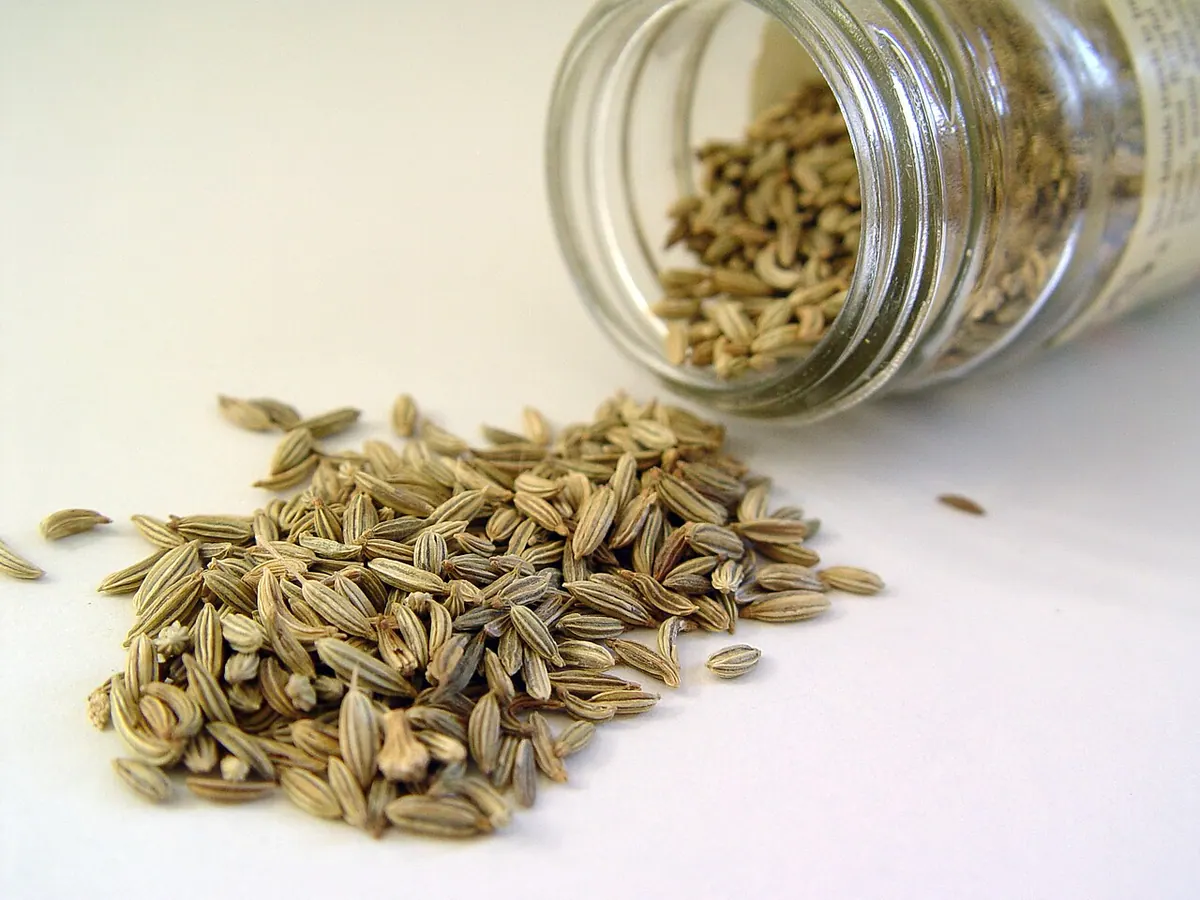
Cumin and fennel are different spices. Cumin is Cuminum cyminum; fennel is Foeniculum vulgare. In familiar Indian names, cumin is jeera and fennel is saunf. Tamil cooks commonly know them as seeragam and sombu respectively.
Both are sold as ridged, seed-like dried fruits. That resemblance explains the confusion; it does not make them the same ingredient.
Put the names side by side
| Name | Cumin | Fennel |
|---|---|---|
| English | Cumin | Fennel |
| Hindi | Jeera | Saunf |
| Tamil | Seeragam | Sombu |
| Botanical identity | Cuminum cyminum | Foeniculum vulgare |
The Spices Board lists both in the Apiaceae family, but under different botanical names. A shared plant family is not a guarantee of the same flavour or culinary role.
What does the photograph show?
Whole cumin is commonly brownish, narrow and ridged. Whole fennel is often greener and looks fuller. These are useful descriptions of common market forms, not a laboratory identification method.
Colour also changes with the product and processing. A roasted spice, a ground spice and a whole unroasted spice will not give you the same visual clues. Start with the label if the form is unfamiliar.
Our spice finder uses real source photographs and labels the form shown. Images are references, rather than a promise that every packet will look identical.
Watch out for a third name
Shahi jeera is a separate naming question. It should not be automatically filed under ordinary cumin simply because both names contain jeera. Names such as black cumin can also be ambiguous across products and regions.
Read shahi jeera versus jeera before matching those labels to a botanical name. A familiar word on a packet is not always a precise species description.
A practical shopping check
- Match the recipe’s name: jeera or saunf.
- Check whether it calls for the whole spice or a powder.
- Look for a botanical name if the product name is ambiguous.
- Ask the seller to clarify an unlabelled ingredient rather than judging by colour alone.
For a jar that has lost its label, compare the source and form as well as its appearance. We cannot certify an unknown spice or establish its purity from a photograph.
Can you substitute fennel for cumin?
They are not the same ingredient, and this guide does not supply a tested universal substitution ratio. Choose the ingredient the recipe specifies, or use a recipe designed for the spice already in your cupboard.
Knowing the difference is useful even if you never need a substitution: it makes buying, labelling and following recipes less uncertain. Explore the ingredient finder for more regional names, or read cinnamon versus cassia for another example of names that need context.