 tastesy
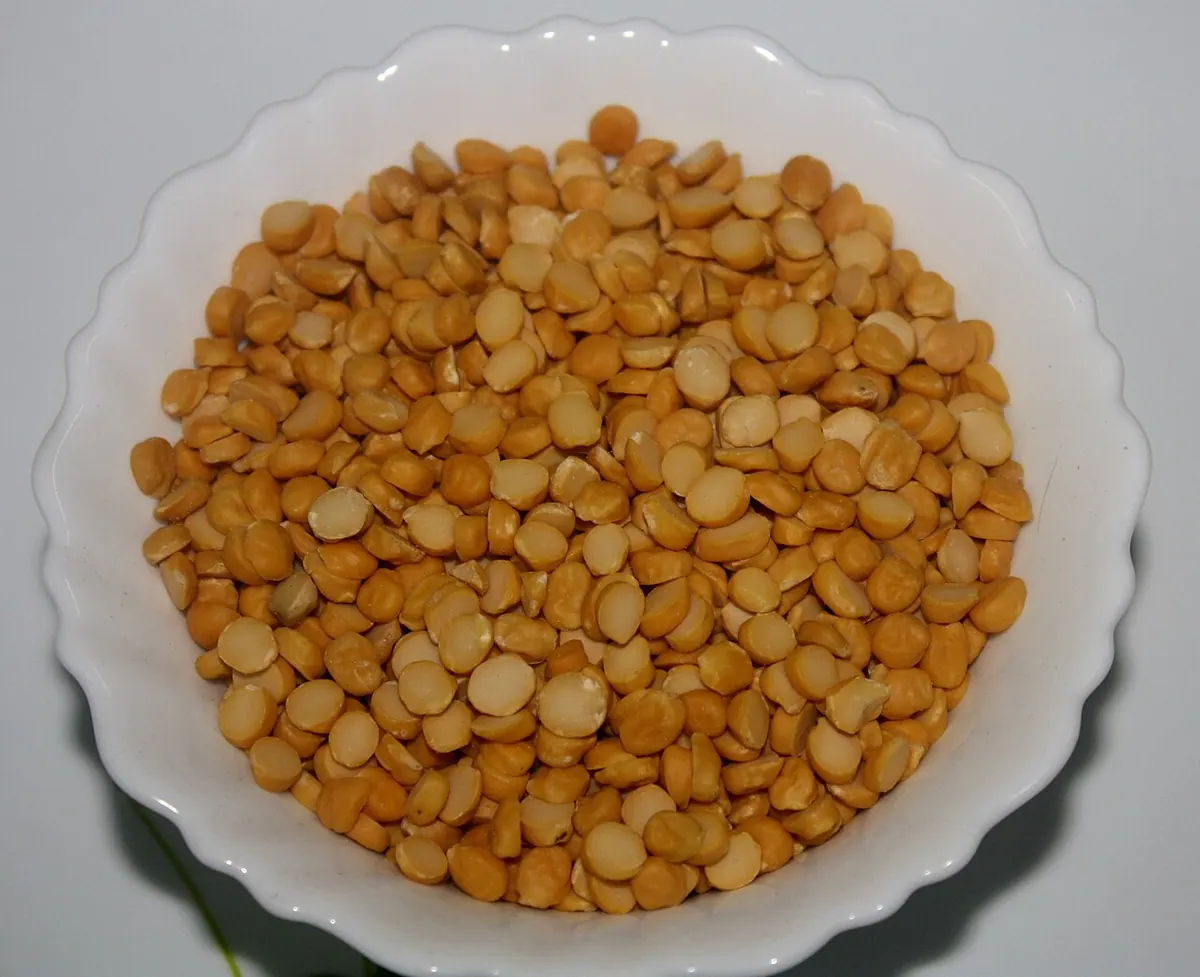
Toor dal and chana dal are not two names for the same pulse. Toor, also called arhar or tuvar, comes from pigeon pea. Chana dal comes from chickpea. Their shared yellow colour can make them easy to confuse in an unlabelled jar.
Start with the plant name, then check whether the packet contains a whole or split form. “Yellow dal” is a description, not a precise ingredient name.
The short comparison
| Detail | Toor dal | Chana dal |
|---|---|---|
| Pulse group | Pigeon pea | Chickpea |
| Common Hindi names | Toor, arhar | Chana dal |
| Familiar Tamil name | Thuvaram paruppu | Kadalai paruppu |
| What “dal” usually indicates here | A split form | A split form |
ICAR distinguishes pigeon pea and chickpea as separate pulse groups. A glossary can help connect familiar household names with those groups, but local spellings and transliterations will vary.
Why colour is not enough
Many pulses can be sold after splitting and removing the outer skin. Removing a darker skin changes the visible colour, which is one reason the whole pulse and its familiar dal can look surprisingly different.
The shape and size of a split piece may help an experienced cook, but there is variation between products. If you are uncertain, a labelled packet or a clear answer from the seller is more useful than guessing from a single photograph.
Chana dal and whole chickpeas
Whole chickpeas are familiar as chana, including dark desi chickpeas and larger pale kabuli types. Chana dal is a processed form, so a picture of a whole chickpea should not be mistaken for a picture of the split dal.
The pulse finder labels the form shown on every card. Where a photograph shows a whole seed, the card says so explicitly.
Shopping with a recipe in hand
- Look for toor/arhar or chana dal rather than an unspecified yellow dal.
- Match the form: whole, split, or split and dehulled.
- Check regional names when the recipe and packet use different languages.
- Keep the packet or note its name when transferring a pulse into a storage jar.
That last habit is simple but useful: a small label avoids having to identify a jar from colour several weeks later.
Can one replace the other?
They are different ingredients. This reference does not establish that a recipe written for one will work unchanged with the other. Use a recipe that names the pulse you have, or follow tested substitution advice for that particular dish.
We do not give a fixed cooking time or water ratio here. Those would need to account for the product, soaking, equipment and intended dish rather than the name alone.
A useful way to remember
Toor belongs with pigeon pea; chana belongs with chickpea. Once that connection is clear, the other pulse names become easier to organise. Browse types of dal and pulse forms or return to the ingredient finder to search another name.